
How Can You Cope With Grief When the Holidays Bring Back Painful Memories?
Coping with grief during the holidays involves acknowledging your emotions, adjusting traditions, setting realistic expectations, and seeking support when needed. Holiday celebrations can intensify feelings of loss because familiar gatherings, memories, and traditions highlight the absence of loved ones. Giving yourself permission to grieve while creating meaningful ways to remember those you’ve lost can make the season more manageable.
The holiday season often brings images of joyful gatherings, family traditions, and meaningful celebrations. However, for individuals grieving the loss of someone they love, Thanksgiving and the surrounding holidays can feel especially difficult.
An empty chair at the dinner table, a familiar holiday recipe, or a cherished family tradition may bring back memories that trigger sadness, loneliness, or emotional exhaustion.
At Family Restoration Counseling Services, we recognize that grief is deeply personal and that healing does not follow a predictable timeline. Our compassionate approach to emotional wellness emphasizes understanding individual experiences, developing healthy coping strategies, and creating space for difficult emotions.
Whether your loss is recent or occurred years ago, learning how to navigate holiday grief can help you approach the season with greater self-compassion and emotional support.
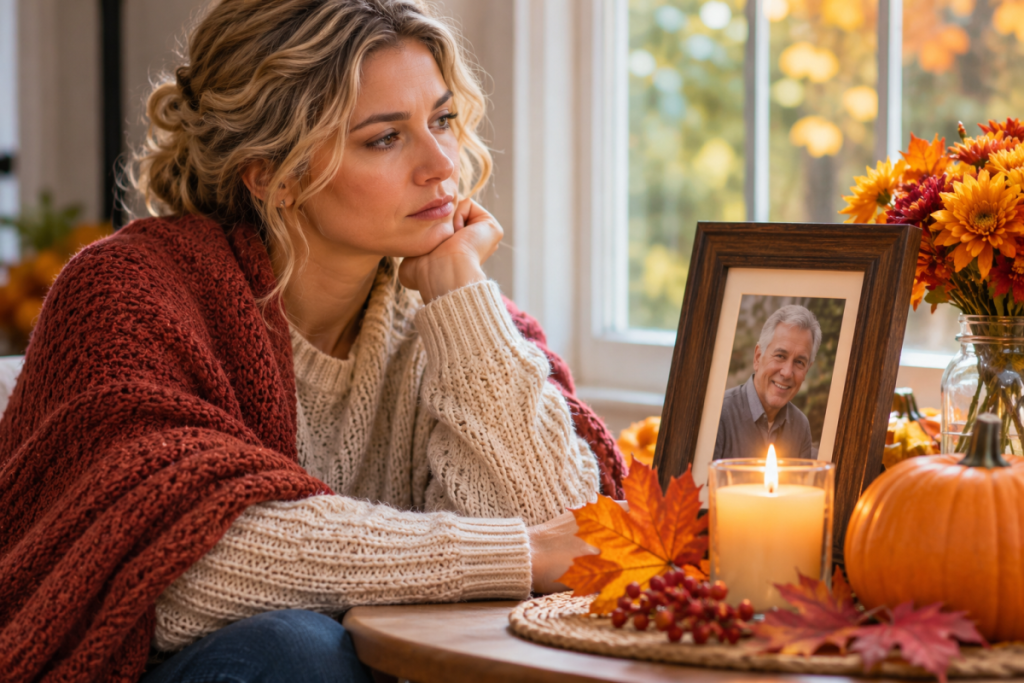
Understanding Holiday Grief and Finding Healthy Ways to Cope
Why Does Grief Feel Stronger During Thanksgiving and the Holidays?
Holiday grief can feel more intense because celebrations are closely connected to memories, relationships, and traditions.
Thanksgiving often revolves around gathering with loved ones, sharing meals, and reflecting on meaningful relationships. When someone important is missing, these familiar experiences can make their absence especially noticeable.
Several factors may contribute to increased grief during the holidays:
- Family traditions: Activities once shared with a loved one may bring back painful memories.
- Emotional expectations: Social pressure to feel grateful or joyful can create additional distress.
- Changes in family dynamics: The absence of a loved one may alter relationships and holiday routines.
- Sensory reminders: Familiar music, foods, decorations, and scents can trigger memories.
- Loneliness: Watching others celebrate may intensify feelings of isolation.
According to the National Institute on Aging, grief can affect emotional well-being, sleep, appetite, and daily functioning.
These reactions may become more noticeable during meaningful anniversaries and family-centered celebrations.
Understanding that grief can fluctuate helps individuals approach their emotions with patience rather than judgment.
How Can You Honor a Loved One While Managing Holiday Grief?
Remembering a loved one can provide comfort and help maintain a meaningful connection to their memory.
Some people worry that participating in holiday celebrations means they are forgetting the person they lost. Others feel guilty when they experience happiness during a season associated with grief.
However, remembering someone and finding moments of joy are not mutually exclusive.
Consider incorporating meaningful remembrance activities into your Thanksgiving traditions:
1. Prepare a favorite family recipe.
Cooking a dish your loved one enjoyed can provide an opportunity to share memories and celebrate their influence on your life.
2. Share stories with family members.
Invite loved ones to recall meaningful experiences, favorite memories, or traditions associated with the person who has died.
3. Create a remembrance tradition.
Lighting a candle, displaying a photograph, or setting aside a quiet moment of reflection can provide a meaningful way to acknowledge their absence.
4. Participate in an act of kindness.
Volunteering or supporting a cause that mattered to your loved one may help create a sense of purpose during a difficult season.
5. Allow traditions to change.
You may choose to continue familiar celebrations, modify them, or create entirely new traditions.
There is no correct way to honor someone’s memory. What matters is finding an approach that feels meaningful and emotionally manageable.
What Can You Do When Holiday Celebrations Feel Emotionally Overwhelming?
Managing holiday grief often requires balancing meaningful connections with emotional boundaries.
You do not have to attend every gathering, maintain every tradition, or pretend to feel happy when you are struggling.
Instead, consider practical strategies that support your emotional well-being.
Give yourself permission to decline invitations.
If a large gathering feels overwhelming, it is acceptable to choose a smaller celebration or spend time in a quieter environment.
Plan for difficult moments.
Before attending Thanksgiving dinner, consider what you might need if emotions become intense. This could include stepping outside, calling a trusted friend, or leaving earlier than expected.
Maintain basic self-care routines.
Consistent sleep, regular meals, gentle physical activity, and adequate rest can support emotional well-being during stressful periods.
Communicate your needs clearly.
Let trusted friends or family members know how they can support you.
For example, you might say, “I’m looking forward to seeing everyone, but I may need some quiet time if I start feeling overwhelmed.”
Avoid comparing your grief to someone else’s.
Family members may experience the same loss differently. Some may want to discuss their loved one openly, while others prefer private reflection.
Respecting these differences can help reduce misunderstandings during holiday gatherings.
How Can Faith and Emotional Support Help During Holiday Grief?
Faith, supportive relationships, and professional counseling can provide meaningful resources for individuals navigating grief.
For people who draw strength from spiritual beliefs, prayer, scripture, worship, or conversations with trusted faith leaders may offer comfort and a sense of connection.
However, spiritual beliefs do not eliminate sadness or create an expectation that grief should disappear.
It is possible to maintain faith while experiencing sorrow, uncertainty, or difficult emotions.
Support from family members, friends, community groups, or grief counseling can also help individuals feel less isolated.
The American Psychological Association recognizes that social support and opportunities to process emotions can be important components of adapting to loss.
Some individuals benefit from speaking with a mental health professional who can help them explore their grief and develop coping strategies.
The goal is not to forget the person who died. It is to find ways to carry their memory while continuing to participate in meaningful aspects of life.
When Should You Seek Professional Counseling for Holiday Grief?
Professional support may be helpful when grief feels overwhelming, interferes with daily responsibilities, or becomes increasingly difficult to manage.
Grief does not have a fixed timeline. Feeling sad during the holidays, even years after a loss, does not automatically indicate a mental health condition.
However, certain experiences may suggest that additional support could be beneficial:
- Persistent difficulty completing everyday activities.
- Significant changes in sleep or appetite.
- Ongoing feelings of hopelessness or emotional isolation.
- Difficulty connecting with supportive relationships.
- Intense emotional distress that feels unmanageable.
- Increasing reliance on alcohol or other substances to cope.
Grief counseling can provide a supportive setting to explore emotions, process painful experiences, and identify coping strategies.
If grief is accompanied by thoughts of suicide or immediate safety concerns, seek urgent professional or emergency support.
At Family Restoration Counseling Services, we believe individuals deserve compassion and understanding as they navigate life’s most difficult experiences.
Frequently Asked Questions About Coping With Holiday Grief
Is it normal to feel grief years after losing someone?
Yes. Grief can resurface during holidays, anniversaries, and meaningful life events, even many years after a loss. Experiencing sadness does not necessarily mean you have stopped making progress in adapting to the loss.
Should you avoid holiday traditions after losing a loved one?
Not necessarily. Some traditions may provide comfort, while others may feel painful. You can continue, modify, or temporarily pause traditions based on your emotional needs.
How can you support someone who is grieving during Thanksgiving?
Acknowledge their loss, listen without judgment, and offer practical support. Avoid pressuring them to feel happy or participate in activities before they feel ready.
Can grief counseling help even if the loss happened years ago?
Yes. Counseling may be beneficial whenever grief creates emotional distress or interferes with daily life, regardless of when the loss occurred.
Find Compassionate Support During the Holiday Season
Grieving during Thanksgiving and the holidays can be emotionally challenging, but you do not have to navigate those feelings alone.
Honoring your loved one’s memory, establishing healthy boundaries, and allowing yourself to experience emotions without judgment can help you approach the season with greater compassion.
At Family Restoration Counseling Services, we understand that every experience of grief is unique. Seeking support can be a meaningful step toward understanding your emotions and finding healthy ways to move forward while honoring the relationships that continue to shape your life.
Struggling with grief this holiday season? Contact Family Restoration Counseling Services today to learn how compassionate counseling can help you navigate loss and find emotional support.