
How Can Couples Handle Disagreements About Thanksgiving Plans Without Damaging Their Relationship?
Couples can handle disagreements about Thanksgiving plans by communicating expectations early, listening to each other’s concerns, setting healthy boundaries with extended family, and making decisions together. Rather than focusing on whose family gets priority, couples should work toward arrangements that respect both partners’ needs. Compromise, empathy, and teamwork can help prevent holiday disagreements from creating lasting relationship tension.
Thanksgiving is meant to be a season of gratitude, connection, and togetherness. However, for many couples, deciding where to celebrate, which relatives to visit, and how to divide time between families can create unexpected stress.
At Family Restoration Counseling Services, we understand that even loving couples can struggle with conflicting expectations, family traditions, and emotional pressures during the holidays. What begins as a simple disagreement about Thanksgiving dinner can sometimes reveal deeper challenges involving communication, boundaries, and feeling valued within a relationship.
Our compassionate, relationship-centered approach emphasizes helping individuals and couples strengthen communication, understand emotional needs, and develop healthier ways of navigating conflict. With intentional conversations and mutual understanding, Thanksgiving can become an opportunity to strengthen your relationship rather than a source of ongoing frustration.
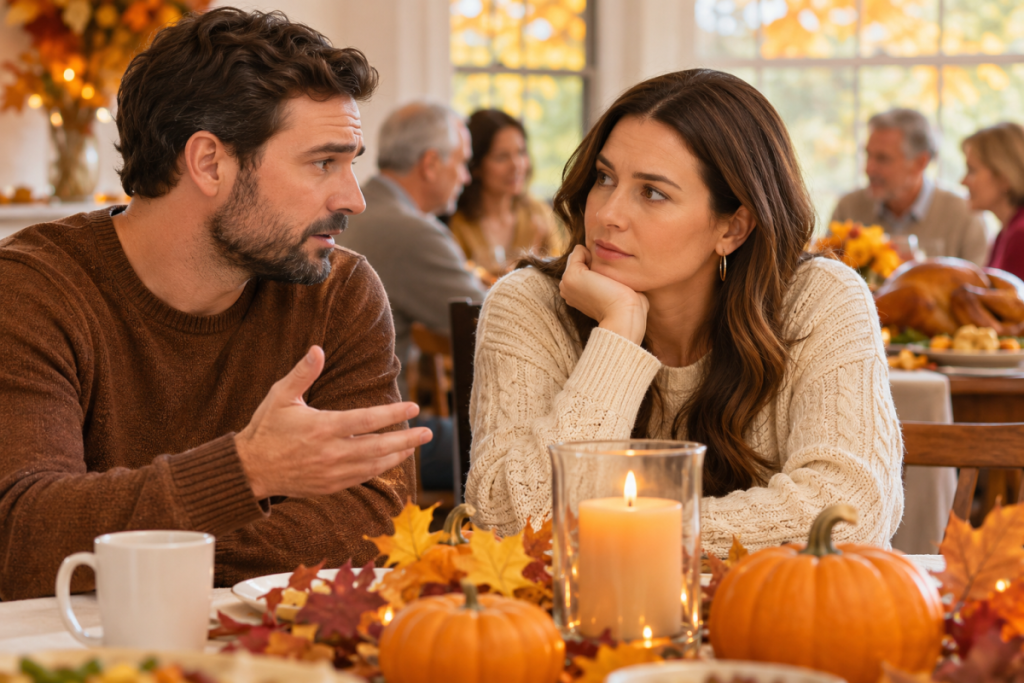
Healthy Communication Strategies for Couples During Thanksgiving
Why Do Couples Argue About Thanksgiving Plans?
Thanksgiving disagreements often involve more than scheduling. They can reflect emotional needs, family expectations, and deeply rooted traditions.
For example, one partner may feel strongly about spending Thanksgiving with their parents because it has always been a cherished family tradition. The other may want to establish new traditions or spend time with relatives they rarely see.
Common sources of Thanksgiving relationship conflict include:
- Competing family expectations: Both families may expect the couple to attend their celebrations.
- Different holiday traditions: Partners may have different ideas about what makes Thanksgiving meaningful.
- Unequal compromises: One partner may feel they consistently sacrifice their preferences.
- Financial or travel stress: Holiday expenses and complicated schedules can increase tension.
- Difficulty setting boundaries: Couples may struggle to say no to relatives without feeling guilty.
Understanding the emotions behind these disagreements is an important first step toward finding a solution.
Instead of assuming your partner is being unreasonable, consider what Thanksgiving represents to them emotionally.
How Can Couples Communicate Their Thanksgiving Expectations Without Arguing?
The most effective holiday conversations begin before frustrations build.
Rather than waiting until invitations arrive or family members begin making demands, set aside time to discuss Thanksgiving plans together.
Consider these communication strategies:
1. Start with curiosity instead of criticism.
Ask your partner what matters most to them about Thanksgiving. Listen carefully before explaining your own preferences.
2. Use “I” statements.
Instead of saying, “You always choose your family over mine,” try, “I feel disappointed when we don’t make time to celebrate with my family.”
This approach helps express emotions without immediately placing blame.
3. Identify shared priorities.
Perhaps both partners value family connection, meaningful traditions, or having a peaceful holiday. Recognizing common goals makes compromise easier.
4. Avoid making decisions during heated moments.
If the conversation becomes tense, take a short break and return when both partners feel calmer.
5. Make decisions as a team.
The goal should not be determining which partner wins. It should be creating a Thanksgiving experience that supports the relationship.
Healthy communication does not mean couples will always agree. It means disagreements can be handled respectfully.
What Are Healthy Boundaries With Extended Family During the Holidays?
Healthy boundaries help couples protect their relationship while maintaining meaningful family connections.
During Thanksgiving, relatives may unintentionally create pressure by expecting attendance, questioning decisions, or expressing disappointment when plans change.
Establishing boundaries allows couples to make choices based on their shared priorities rather than guilt.
Helpful Thanksgiving boundaries might include:
- Deciding together how much time to spend with each family.
- Avoiding last-minute changes without discussing them first.
- Politely declining invitations that create excessive stress.
- Limiting conversations about sensitive family conflicts during gatherings.
- Supporting each other when relatives question holiday decisions.
For example, a couple might say:
“We appreciate the invitation and love spending time with everyone. This year, we’ve decided to celebrate Thanksgiving at home, but we’d love to plan another time together.”
Clear, respectful communication can reduce misunderstandings while reinforcing the couple’s partnership.
Boundaries are not about rejecting family members. They are about creating healthy expectations that respect everyone’s needs.
How Can Couples Compromise When Both Families Expect Thanksgiving Visits?
Compromise works best when both partners feel heard and neither consistently carries the burden of sacrifice.
There is no single Thanksgiving arrangement that works for every relationship.
Some couples alternate holidays between families. Others divide Thanksgiving Day, celebrate with one family on a different weekend, or begin hosting their own gatherings.
When evaluating possible arrangements, consider:
- Travel distance and available time.
- Children’s schedules and emotional needs.
- Financial limitations.
- Family health considerations.
- Existing traditions and opportunities to create new ones.
One helpful strategy is to discuss holiday expectations for several years rather than focusing exclusively on the current Thanksgiving.
For example, alternating Thanksgiving celebrations annually may create a predictable arrangement that reduces recurring disagreements.
However, fairness does not always mean splitting time exactly in half. A healthy compromise considers each partner’s circumstances and emotional priorities.
The American Psychological Association identifies healthy communication and constructive conflict management as important elements of maintaining strong relationships.
Couples who approach disagreements collaboratively can use holiday planning as an opportunity to practice these relationship skills.
When Should Couples Consider Counseling for Recurring Holiday Conflicts?
Couples counseling may be helpful when Thanksgiving disagreements reflect ongoing relationship challenges rather than isolated scheduling differences.
Some couples notice that holiday conflicts repeatedly lead to arguments, resentment, emotional withdrawal, or difficulty communicating.
Potential signs that additional support could be beneficial include:
- Having the same arguments every holiday season.
- Feeling dismissed or unheard when discussing family expectations.
- Struggling to establish boundaries with relatives.
- Experiencing ongoing resentment about past compromises.
- Avoiding important conversations because they frequently escalate.
Counseling can provide a supportive environment where partners explore communication patterns, identify underlying emotional needs, and practice healthier conflict-resolution strategies.
Seeking relationship support does not mean a couple has failed. It can be a proactive step toward developing greater understanding and emotional connection.
Frequently Asked Questions About Thanksgiving Relationship Conflict
Is it normal for couples to argue about holiday plans?
Yes. Holiday disagreements are common because couples often have different traditions, family obligations, and expectations. Respectful communication and shared decision-making can help prevent these differences from becoming ongoing conflicts.
Should married couples always spend Thanksgiving together?
There is no universal rule. Couples should discuss their preferences, responsibilities, and relationship priorities before deciding whether to celebrate together or separately.
How do you tell family members you won’t attend Thanksgiving?
Communicate your decision politely, clearly, and early. Express appreciation for the invitation without feeling obligated to provide lengthy explanations or defend your choice.
Can couples counseling help with family boundary issues?
Couples counseling can help partners identify unhealthy communication patterns, establish shared expectations, and develop strategies for setting respectful boundaries with extended family.
Strengthen Your Relationship This Thanksgiving
Thanksgiving disagreements do not have to overshadow the joy of the holiday season. With open communication, healthy boundaries, and a willingness to understand each other’s perspectives, couples can create traditions that strengthen their relationship.
At Family Restoration Counseling Services, we believe meaningful relationships grow through understanding, compassion, and intentional effort.
Ready to improve communication and build a stronger relationship? Contact Family Restoration Counseling Services today to learn how counseling can support you and your partner.